Table of Contents
- What Are Giant Amusement Rides?
- Giant Ferris Wheels
- Giant Pendulum Rides
- Giant Roller Coasters
- Drop Towers
- Giant Pirate Ships
- How to Choose the Right Ride
- Why Choose Prodigy Giant Amusement Rides?
- Conclusion
- FAQs
1. What Are Giant Amusement Rides?
Giant amusement rides are large-scale attractions designed to become major focal points within a park. Compared with standard rides, they usually offer greater height, capacity, footprint, or visual impact. Many are designed for teenagers and adults, while some large rides are suitable for families.
Giant rides can increase visitor excitement, strengthen a park’s identity, create highly visible photo opportunities, and become signature attractions. The best choice depends on the target audience, available site area, expected visitor volume, and local regulations.
2. Giant Ferris Wheels
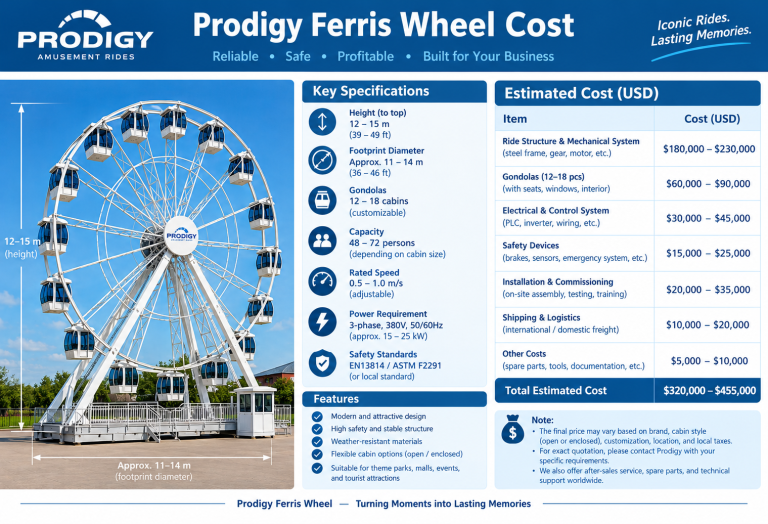
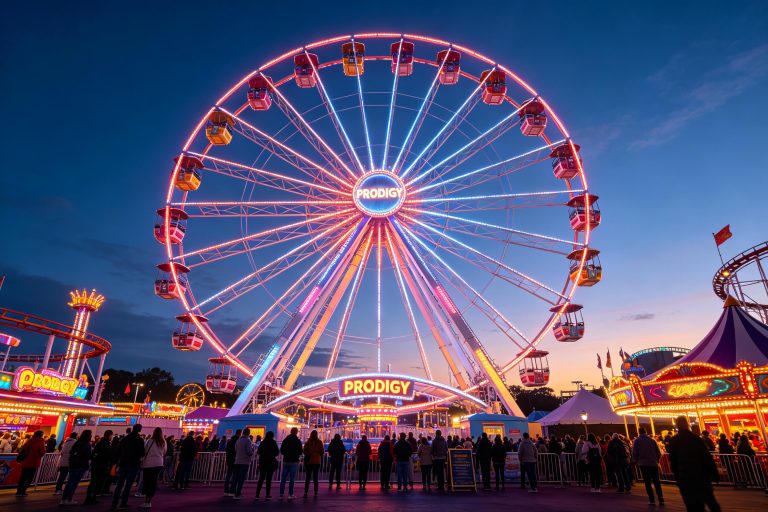
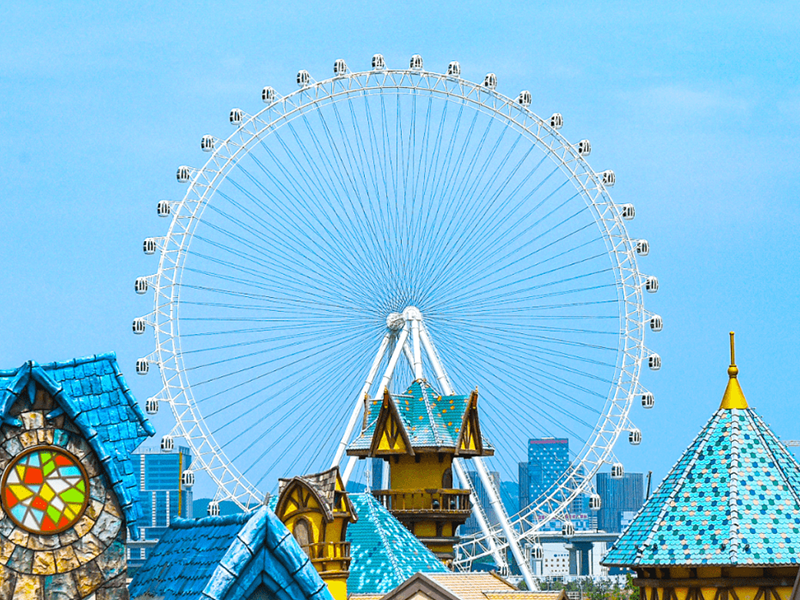
Giant Ferris wheels are one of the most recognizable amusement rides in the world. They combine panoramic views with a relatively gentle riding experience, making them attractive to families, couples, and mixed-age groups.
Modern giant Ferris wheels can be customized with cabin styles, wheel colors, LED lighting, branding, and operating configurations. Because the attraction is highly visible, it can become a landmark for a theme park, resort, tourist destination, shopping complex, or waterfront development.
For operators looking for a landmark attraction, a giant Ferris wheel can provide both entertainment and strong visual exposure.
3. Giant Pendulum Rides
Giant pendulum rides are popular among thrill-seeking visitors because they combine large swinging movements with height and acceleration. Depending on the model, riders may experience strong changes in direction, high elevations, and an open-air feeling.

Large pendulum rides are especially suitable for parks targeting teenagers and adults. Their dramatic movement also makes them easy to promote through videos and social media content.
4. Giant Roller Coasters
Roller coasters remain a signature category of giant amusement rides. Large coasters can include steep drops, rapid turns, launches, inversions, and other track elements designed around a specific theme.

A giant roller coaster requires careful engineering because the project involves structural design, track layout, ride dynamics, passenger restraints, evacuation planning, and site development. Operators should evaluate expected capacity, track footprint, maintenance requirements, and technical support before purchasing.
For a park seeking a headline attraction, a well-designed roller coaster can become one of its defining features.
5. Drop Towers
Drop towers attract thrill riders with vertical ascent followed by a rapid descent. They are often installed in visible locations because their height makes them easy to recognize across a park.

Drop towers can be customized in terms of height, seat arrangement, appearance, lighting, and surrounding theming. They are often used as standalone thrill attractions or as part of a larger extreme-ride zone. Operators should focus on structural engineering, braking systems, restraint design, inspection procedures, and local safety requirements.
6. Giant Pirate Ships
Giant pirate ship rides provide a different type of thrill through repeated swinging motion. They are popular because they are easy for visitors to understand and can serve younger thrill seekers and adults, depending on the model.

These rides can also support strong themed presentation. With decorative structures, custom colors, and lighting, operators can integrate pirate ships into adventure, ocean, fantasy, or family-themed areas.
7. How to Choose the Right Ride
Before buying giant amusement rides, park owners should evaluate several practical factors. First, define the target market. A giant Ferris wheel may suit families and sightseeing visitors, while a pendulum ride or roller coaster may be better for thrill-oriented audiences.
Second, review the site. Measure available land, height limitations, foundation conditions, access routes, and utility requirements. Third, compare capacity and operating efficiency. A ride with strong visual appeal also needs suitable throughput for busy periods.
Safety and compliance are equally important. Ask suppliers about engineering documentation, manufacturing standards, testing, installation, training, spare parts, and after-sales support. Customization should also be considered, especially when the ride needs to match a park theme or corporate brand.
8. Why Choose Prodigy Giant Amusement Rides?
Prodigy focuses on amusement equipment for commercial entertainment projects and offers a range of large attractions, including Ferris wheels, roller coasters, pendulum rides, bumper cars, carousels, and other amusement equipment.
For global buyers, Prodigy can provide customized solutions based on ride type, dimensions, colors, lighting, cabin or seat configuration, branding, and project requirements.
When comparing suppliers, park operators should look beyond the initial purchase price. Engineering capability, material quality, production workmanship, testing, customization, installation guidance, replacement parts, and long-term service can all affect the total project cost and operating experience.
9. Conclusion
The most popular giant amusement rides in parks include giant Ferris wheels, pendulum rides, roller coasters, drop towers, and pirate ships. Each attraction offers a different combination of thrill, capacity, visual impact, and commercial potential.
The right ride is not simply the biggest one. It should match the park’s audience, available space, investment plan, theme, and long-term operating strategy. By comparing technical specifications, customization options, safety systems, and manufacturer support, operators can build a more attractive and practical amusement project.
10. FAQs
What is the most popular giant amusement ride?
Giant Ferris wheels and roller coasters are among the most recognizable large attractions, while pendulum rides and drop towers are popular with thrill-seeking visitors.
Are giant amusement rides suitable for all parks?
Not every giant ride fits every park. Land size, visitor demographics, budget, local regulations, transportation, foundation requirements, and maintenance capabilities should be reviewed before purchase.
Can giant amusement rides be customized?
Yes. Depending on the manufacturer and ride type, customization may include dimensions, colors, lighting, cabins, seats, theming, branding, and other project-specific features.
What should I ask a giant amusement ride manufacturer?
Ask about engineering design, materials, safety systems, manufacturing standards, testing, installation, spare parts, warranty, training, and after-sales service.