Table of Contents
- How Long Does It Take to Manufacture a Ferris Wheel?
- How Long Does Ferris Wheel Installation Take?
- Typical Ferris Wheel Project Timeline
- What Factors Affect Manufacturing Time?
- What Factors Affect Installation Time?
- How Prodigy Manages Ferris Wheel Projects
- How Investors Can Reduce Project Delays
- Ferris Wheel Trends in 2026
- Häufig gestellte Fragen
1. How Long Does It Take to Manufacture a Ferris Wheel?
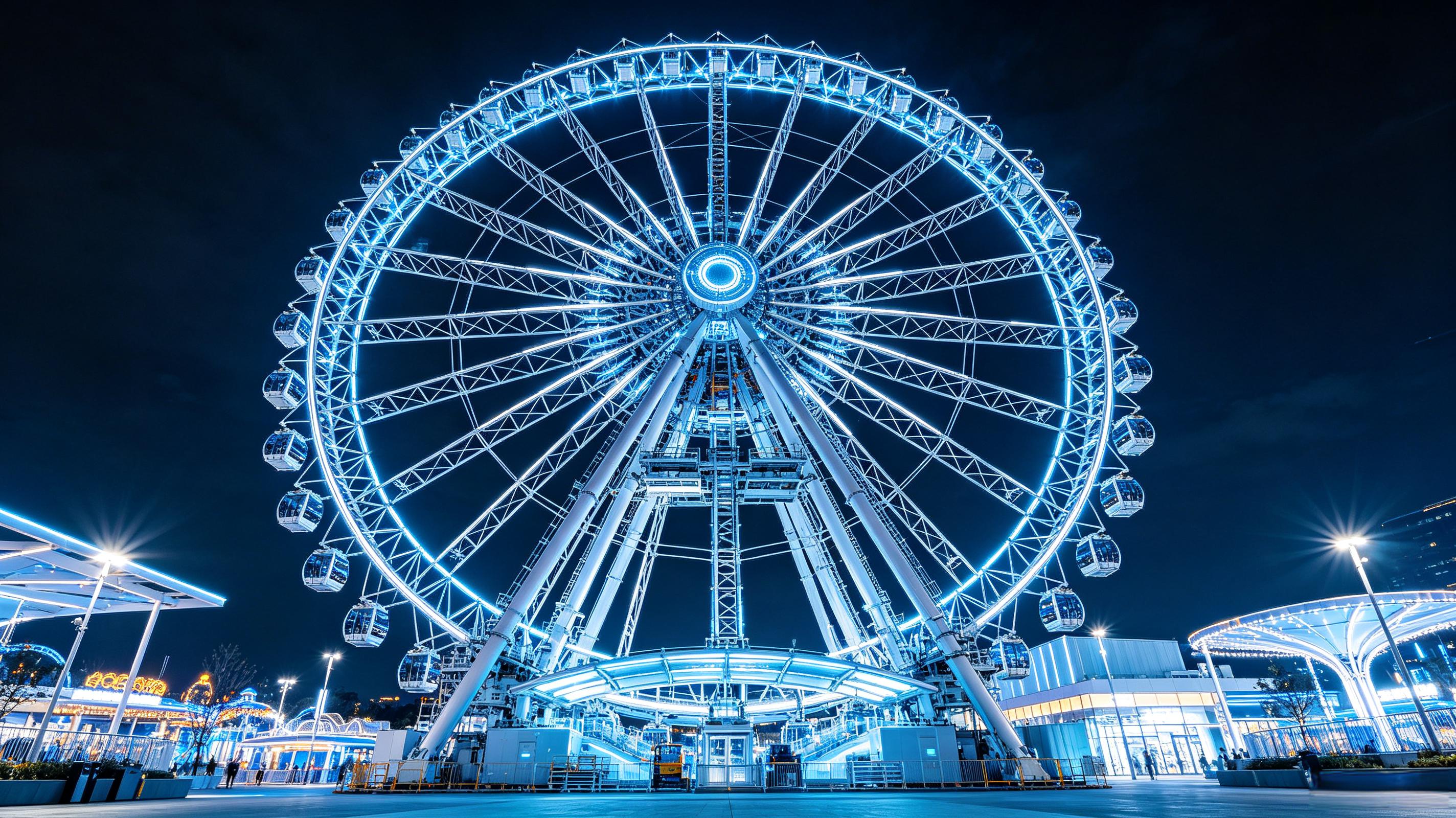
The time required to manufacture a Riesenrad depends on its size, design complexity, Passagierkapazität, cabin configuration, Anpassung, Materialien, and production schedule.
For a standard commercial Ferris wheel, the manufacturing process may typically take several months, while a highly customized giant observation wheel can require a substantially longer engineering and production period.
A useful planning estimate is:
| Project Stage | Typical Time |
|---|---|
| Project consultation | 1–3 weeks |
| Engineering and design | 2–8 weeks |
| Contract and design approval | 1–4 weeks |
| Herstellung | 2–6 months |
| Factory testing | 1–3 weeks |
| Shipping | 2–8 weeks |
| Site preparation | 1–3 months |
| Installation | 2–8 weeks |
| Testing and commissioning | 1–3 weeks |
These are planning ranges rather than guaranteed deadlines. Large or highly customized projects can take longer.
2. How Long Does Ferris Wheel Installation Take?
Ferris wheel installation time depends heavily on wheel height and site conditions.
A small Ferris wheel may be assembled relatively quickly, while a 50m, 65M, 88M, or 100m+ observation wheel requires significantly more engineering, lifting equipment, strukturelle Montage, electrical work, testing, and commissioning.
For many commercial projects, physical installation can take several weeks, assuming the foundation and site infrastructure are already prepared.
The installation process generally includes:
- Delivery of structural components
- Foundation inspection
- Base and support installation
- Drive system installation
- Wheel assembly
- Cabin installation
- Electrical and control-system connections
- Lighting installation
- Safety-system testing
- Trial operation and commissioning
The actual schedule should be confirmed with the manufacturer based on the final engineering design.
3. Typical Ferris Wheel Project Timeline
A complete Ferris wheel project should be planned from the earliest design stage rather than starting with manufacturing alone.
Phase 1: Consultation
The investor provides the project location, available land, target passenger capacity, desired height, Budget, and intended application.
Phase 2: Technisches Design
The manufacturer develops technical drawings and determines structural requirements, cabin configurations, drive systems, electrical specifications, foundation requirements, and safety systems.
Phase 3: Design Approval
The investor reviews the design and confirms colors, cabin style, Beleuchtung, Branding, dimensions, and other customization requirements.
Phase 4: Herstellung
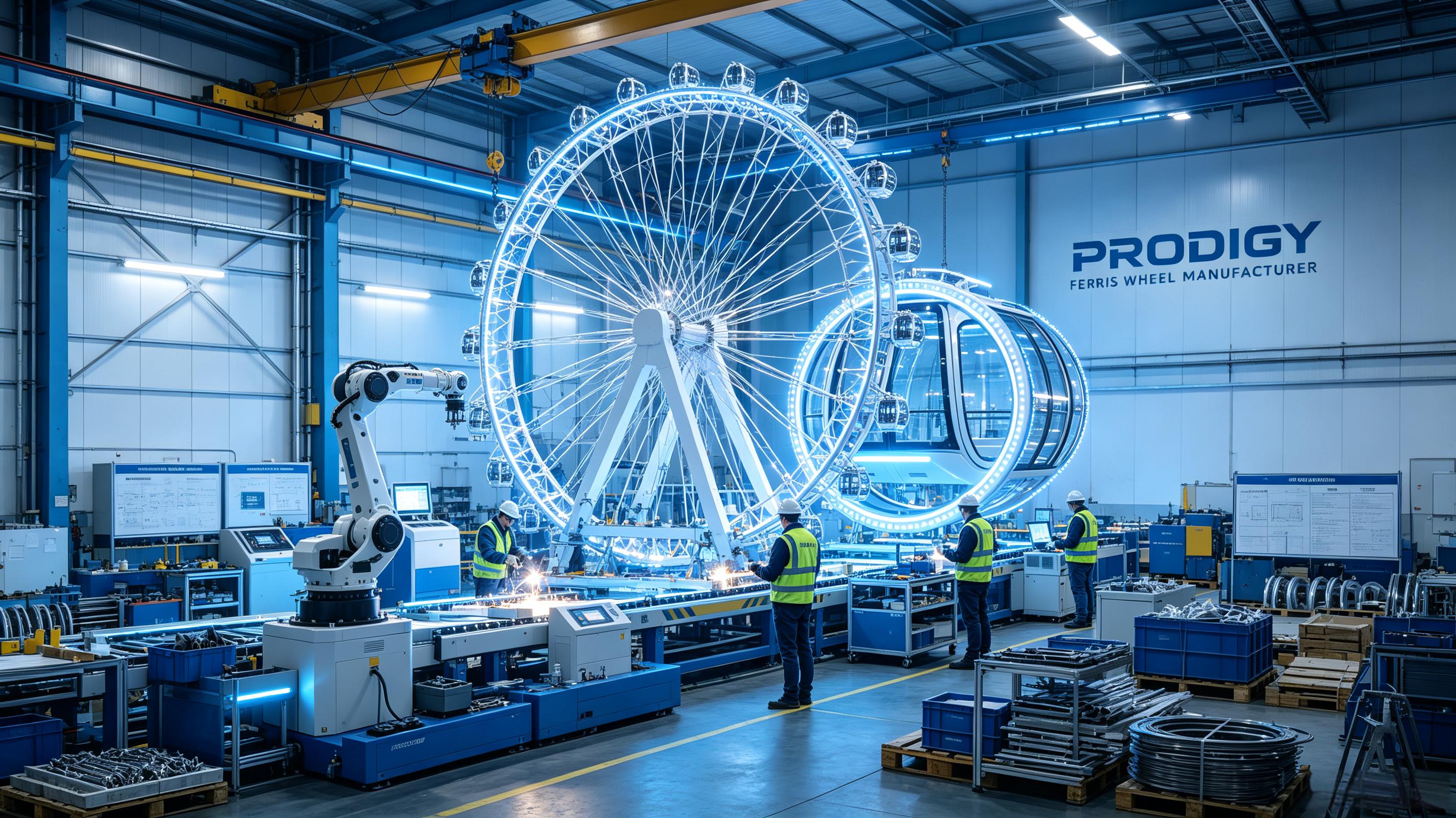
The factory begins steel fabrication, Schweißen, machining, Malerei, cabin production, electrical assembly, and other manufacturing processes.
Phase 5: Factory Inspection
Vor dem Versand, buyers may arrange factory inspection or third-party quality inspection. Je nach Projekt, components may also undergo testing and dimensional checks.
Phase 6: Transport
The Ferris wheel is disassembled into transportable components and shipped to the destination. International shipping time depends on origin, destination, customs, port schedules, and transportation method.
Phase 7: Site Installation
After the foundation has reached the required condition, the manufacturer or installation team assembles the wheel, cabins, drive equipment, Steuerungssystem, and electrical components.
Phase 8: Testing and Commissioning
The completed Ferris wheel undergoes trial operation, safety checks, control-system testing, and final commissioning before opening to visitors.
4. What Factors Affect Manufacturing Time?
Several factors can make a Ferris wheel project faster or slower.
Wheel Size
A 12m or 20m kiddie wheel requires considerably less material and engineering than a giant observation wheel.
Anpassung
Standard models generally have shorter production schedules. Custom cabins, special structures, unique colors, complex LED systems, and architectural features can increase manufacturing time.
Engineering Requirements
Projects in areas with high winds, extreme temperatures, coastal environments, or special seismic requirements may require additional engineering analysis.
Passagierkapazität
More cabins and larger cabins increase manufacturing complexity and can extend the production schedule.
Certification
Some destinations require specific inspections, documentation, testing, or approvals before the ride can enter operation.
5. What Factors Affect Installation Time?
Site preparation is one of the most common causes of delays.
The foundation must be completed according to the manufacturer’s specifications before the main structure can be installed. Investors should also ensure that roads, cranes, elektrische Systeme, drainage, and construction access are ready.
Other factors include:
- Weather conditions
- Local labor availability
- Crane access
- Transportation delays
- Customs clearance
- Foundation curing time
- Local inspection requirements
- Electrical connection
- Final safety testing
For a giant Ferris wheel, transportation and lifting logistics should be planned together with the manufacturer well in advance.
6. How Prodigy Manages Ferris Wheel Projects
Prodigy is a China-based amusement equipment manufacturer offering Ferris wheels in different sizes and configurations.
Its published portfolio includes more than 30 Riesenradmodelle, ranging from smaller kiddie wheels to larger commercial and observation-wheel solutions. The company states that it operates a 55,000-square-meter production base and a 3,000-square-meter showroom.
Prodigy can also provide customized Ferris wheel solutions involving cabin configurations, Farben, Grafik, Beleuchtung, and other project requirements.
Für Investoren, discussing the entire project with the manufacturer at the beginning can help coordinate design, Herstellung, Transport, Installation, and commissioning more efficiently.
When requesting a production schedule from Prodigy, buyers should provide the destination country, required wheel height, cabin capacity, site dimensions, customization requirements, and target opening date.
7. How Investors Can Reduce Project Delays
Investors can take several steps to keep the Ferris wheel project on schedule.
First, finalize specifications early. Last-minute design changes can affect engineering and production.
Second, prepare the foundation in parallel with manufacturing. This can significantly reduce the overall project duration.
Third, confirm local regulations early. Certification and inspection requirements should be understood before production begins.
Fourth, prepare shipping documents in advance. Customs problems can delay delivery after the equipment has already left the factory.
Fifth, maintain communication with the manufacturer. Regular progress updates help identify potential problems before they become major delays.
A detailed project schedule should clearly identify responsibilities for the manufacturer, buyer, construction contractor, shipping company, and local authorities.
8. Ferris Wheel Trends in 2026
Ferris wheel projects in 2026 are increasingly designed around experience, Anpassung, and landmark value.
Popular features include panoramic cabins, air conditioning, VIP-Kabinen, premium interiors, programmable LED lighting, digitale Unterhaltung, smart monitoring, energy-efficient drive systems, and customized themes.
For large tourism projects, investors are also treating Ferris wheels as destination landmarks rather than simply amusement rides. This approach can create additional revenue opportunities through premium cabins, advertising, special events, dining, und Fotografie-Erlebnisse.
9. Häufig gestellte Fragen
How many months does it take to build a Ferris wheel?
A standard commercial Ferris wheel may require several months for engineering and manufacturing. Larger or highly customized wheels can require longer production schedules.
How long does it take to install a Ferris wheel?
Installation can range from a few weeks to several months for complex projects, depending on wheel size, foundation readiness, Standortbedingungen, weather, equipment access, and local requirements.
Can manufacturing and site preparation happen at the same time?
Ja. In many projects, foundation construction and site preparation are completed while the Ferris wheel is being manufactured. This can shorten the overall project schedule.
How long does a giant Ferris wheel take to build?
Large observation wheels generally require a longer engineering, Herstellung, Transport, and installation process than smaller amusement wheels. The manufacturer should provide a project-specific schedule.
Can Prodigy customize a Ferris wheel?
Ja. Prodigy offers different Ferris wheel sizes and customization options, including cabin configurations, Farben, Beleuchtung, Grafik, and project-specific requirements.