

Table of Contents
- Introduction to Commercial Bumper Cars
- Why Buy Bumper Cars from China?
- Prodigy Bumper Cars for Sale
- Choosing the Right Power System
- Customization Options
- Manufacturing Quality and Safety
- Bumper Cars Price and Project Costs
- How to Choose a Reliable Supplier
- Frequently Asked Questions
1. Introduction to Commercial Bumper Cars
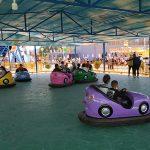
Bumper cars are interactive amusement rides that allow guests to steer small electric vehicles within a designated arena. Their combination of driving, maneuvering, and controlled collisions makes them popular attractions at amusement parks, shopping malls, family entertainment centers (FECs), resorts, and indoor recreation venues.

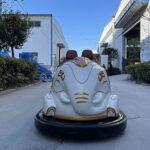
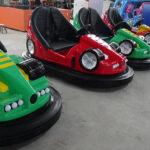
Modern commercial bumper cars are available in different body styles, passenger configurations, and power systems. Buyers can choose classic dodgem cars, racing-inspired designs, colorful children’s models, or customized vehicles that match a venue’s theme.

When searching for bumper cars for sale, commercial operators should evaluate the vehicle specifications, arena requirements, power supply, maintenance needs, and safety documentation before placing an order.
2. Why Buy Bumper Cars from China?
China has an established amusement equipment manufacturing industry serving buyers in domestic and international markets. Purchasing directly from a manufacturer may allow buyers to discuss product configurations, custom designs, order quantities, and delivery requirements with the production team.
A qualified bumper cars supplier should provide detailed specifications, product documentation, inspection procedures, warranty terms, and information about spare parts. Buyers should also establish whether the supplier manufactures the equipment directly and what services are included in the quotation.
For overseas projects, confirm export packing, shipping arrangements, customs responsibilities, installation support, and after-sales service. Comparing complete proposals helps operators understand the total project cost rather than focusing solely on the vehicle price.
3. Prodigy Bumper Cars for Sale
Prodigy is a China-based amusement ride manufacturer offering several bumper car styles for commercial venues. Its product range includes battery-powered bumper cars, ground-grid models, ceiling-grid systems, and racing-inspired designs.
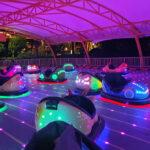
Depending on the selected model, buyers may be able to discuss fiberglass-reinforced plastic (FRP) body styling, steel chassis construction, LED lighting, sound effects, and customized colors. Available features and specifications should be confirmed for the exact product.
Prodigy bumper cars may be considered for permanent amusement parks, indoor entertainment centers, shopping malls, and other suitable leisure venues.
To explore the available options, visit the Prodigy Bumper Cars for Sale page. Request a model-specific quotation covering passenger capacity, dimensions, power requirements, operating speed, included accessories, and applicable safety documentation.
4. Choosing the Right Power System
The power system affects installation requirements, operating schedules, and long-term maintenance.
Battery-powered bumper cars: These vehicles use rechargeable onboard batteries and generally provide greater flexibility in arena layout. Buyers should consider charging time, battery life, charging arrangements, and expected daily operating hours.
Ground-grid bumper cars: These models draw power through a compatible conductive floor system. They can suit permanent arenas, but the specialized flooring and electrical installation must be planned carefully.
Ceiling-grid bumper cars: These vehicles use an overhead conductive grid. Buyers need to assess ceiling height, structural support, electrical infrastructure, and the overall venue layout.
Before selecting a system, compare the initial installation cost, operating requirements, maintenance arrangements, and available space. The most suitable option depends on the specific project rather than one configuration being ideal for every venue.
5. Customization Options
A professional bumper cars manufacturer should explain which design elements can be customized.
- Vehicle styling: Choose from available racing-inspired, cartoon-style, futuristic, or classic designs.
- Colors and branding: Discuss paint finishes, color combinations, and logo options.
- Lighting and sound: Ask about available LED effects, music, and sound features.
- Passenger configuration: Confirm the approved seating arrangement and capacity of each vehicle.
- Arena integration: Coordinate the vehicle quantity, driving area, barriers, entrance, and operator station.
Customization availability depends on the model and production requirements. Obtain written confirmation of all selected features before manufacturing begins.
6. Manufacturing Quality and Safety
Quality assurance should be a key part of the purchasing process. Ask the supplier about chassis construction, body materials, electrical assembly, steering controls, braking arrangements, protective bumpers, and factory testing.
Request relevant technical drawings, operating instructions, maintenance manuals, inspection records, and certificates applicable to the specific model and destination market. Certification claims should be verified against the actual equipment.
The arena should have suitable boundaries, clear entry and exit points, appropriate operating space, and a defined operator area. Electrical infrastructure must be installed according to the manufacturer’s instructions and local regulations.
Before opening, arrange required inspections and commissioning. Train operators in daily checks, passenger restrictions, emergency procedures, charging where applicable, and preventive maintenance. Safe operation depends on the complete ride system, correct installation, and competent supervision.
7. Bumper Cars Price and Project Costs
The price of bumper cars varies according to the power system, vehicle design, order quantity, passenger configuration, decorative features, and customization requirements.
The total investment may also include arena flooring, barriers, electrical infrastructure, shipping, insurance, import duties, installation, spare parts, and maintenance equipment.
When requesting a quotation from Prodigy, provide the project location, desired number of vehicles, preferred power system, arena dimensions, and customization requirements. Ask for an itemized quotation with production lead time, payment terms, warranty coverage, packing details, and delivery responsibilities.
Comparing equivalent equipment packages helps buyers avoid unexpected costs and make more informed purchasing decisions.
8. How to Choose a Reliable Supplier
Before selecting a bumper cars supplier in China, review the company’s product range, manufacturing capabilities, project references, export experience, and after-sales arrangements.
Ask for model-specific specifications and clarify whether the supplier provides installation guidance, technical training, spare parts, and warranty support. Where practical, arrange a factory visit or request documented evidence of production and inspection procedures.
Prodigy is one manufacturer to consider when comparing commercial bumper car options. Evaluate its proposed configuration against your venue’s requirements, local regulations, operating budget, and long-term maintenance plan.
A reliable purchasing decision should be based on verified specifications, documented responsibilities, and total project cost—not just promotional images or the lowest initial price.
9. Frequently Asked Questions
Q1: Which bumper cars are best for indoor venues?
Battery-powered models may offer flexible installation, while ground-grid and ceiling-grid systems may suit permanent arenas with compatible infrastructure. Check the venue requirements before choosing.
Q2: Can I customize bumper cars with my own colors or logo?
Some models offer color and branding options. Confirm the available choices and any additional charges with the manufacturer.
Q3: What information is needed for a quotation?
Provide your country, arena dimensions, vehicle quantity, preferred power system, customization requirements, and target opening date.
Q4: Does the price include installation?
Not necessarily. Confirm whether the quotation includes shipping, arena infrastructure, installation, commissioning, training, and spare parts.
Conclusion
Buying bumper cars for sale from a suitable manufacturer involves more than selecting an attractive vehicle. Buyers should compare power systems, customization options, manufacturing quality, arena requirements, safety documentation, and after-sales support. Prodigy offers several bumper car configurations for commercial amusement projects. Requesting a detailed quotation and verifying model-specific requirements can help operators choose equipment that fits their venue and business plan.