

Table of Contents
- What Are Commercial Bumper Cars?
- Why Choose Bumper Cars for Amusement Parks and FECs?
- Types of Commercial Bumper Cars
- Key Features to Consider
- Safety and Installation Requirements
- How to Choose a Reliable Bumper Car Manufacturer
- Why Consider Prodigy Commercial Bumper Cars?
- Frequently Asked Questions
- Conclusion
1. What Are Commercial Bumper Cars?
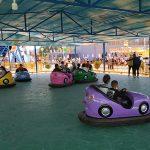
Commercial bumper cars are electric amusement rides designed for repeated public use in amusement parks, family entertainment centers (FECs), shopping malls, resorts, and indoor recreation venues. Also known as dodgem cars, these attractions allow guests to steer vehicles within a designated arena and enjoy interactive driving experiences.

Unlike ordinary recreational vehicles, commercial bumper cars are developed for frequent operation, supervised riding, and the demands of public entertainment venues. Typical configurations include an electric drive system, steering controls, protective bodywork, impact-absorbing bumpers, seating, and appropriate passenger restraints.
For operators, choosing the right equipment means evaluating more than appearance. Power supply, vehicle capacity, arena dimensions, maintenance requirements, safety documentation, and after-sales support all influence the long-term success of a bumper car attraction.

2. Why Choose Bumper Cars for Amusement Parks and FECs?
Bumper cars offer a familiar activity that appeals to children, teenagers, adults, and families. Their interactive nature encourages friendly competition and makes them suitable for venues serving different age groups.
For amusement parks, bumper cars can complement roller coasters, carousels, and other family rides. For FECs, they can become a central attraction alongside arcade games, bowling, soft play, and other indoor entertainment activities.
Key benefits include:
- Broad customer appeal: A recognizable ride concept suitable for family-oriented entertainment.
- Repeat-play potential: Guests can return to challenge friends or enjoy another ride session.
- Flexible design options: Vehicle styles, colors, lighting, and branding can be selected to suit the venue.
- Multiple installation possibilities: Depending on the power system and model, bumper cars may suit permanent indoor arenas or selected outdoor and temporary attractions.
- Attraction variety: Racing-inspired vehicles and themed designs can help create a distinctive entertainment experience.
Actual attendance and profitability depend on location, ticket pricing, operating hours, capacity, staffing, and local competition. Operators should evaluate these factors before investing.
3. Types of Commercial Bumper Cars
Selecting the right power system is one of the most important purchasing decisions.
Battery-Powered Bumper Cars
Battery-powered bumper cars use onboard rechargeable batteries. They generally avoid the need for a conductive floor or overhead electrical grid, making them attractive for venues that prioritize flexible layouts or mobile operation.
Buyers should compare charging time, operating duration, battery replacement costs, charging infrastructure, and the manufacturer’s recommended maintenance schedule.
Ground-Grid Bumper Cars
Ground-grid systems receive power through a specially designed conductive floor. They can support continuous operation without relying on onboard batteries, but the venue needs compatible flooring, electrical infrastructure, and professional installation.
This option may suit permanent arenas with predictable layouts and frequent operating hours.
Ceiling-Grid Bumper Cars
Ceiling-grid bumper cars draw power through an overhead electrical collection system and a compatible conductive floor. These systems are commonly associated with traditional permanent bumper car arenas.
Before purchasing, confirm ceiling height, electrical requirements, floor construction, installation costs, and maintenance access.
The best option depends on the venue’s infrastructure, operating schedule, budget, and plans for future relocation or expansion.
4. Key Features to Consider
When comparing commercial bumper cars, evaluate the following features.
Vehicle capacity: Choose single-seat or multi-passenger configurations according to your target audience, operating rules, and available arena space.
Construction materials: Ask about chassis design, body materials, protective bumper construction, corrosion resistance, and the availability of replacement parts.
Control system: Review steering response, acceleration control, speed settings, braking behavior, and emergency shutdown arrangements.
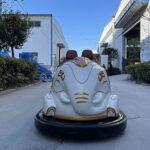
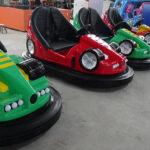
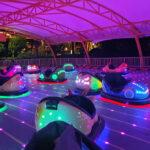
Lighting and appearance: LED lighting, racing-inspired bodies, themed graphics, and custom colors can help the attraction match your brand identity.
Maintenance access: Confirm how batteries, motors, controllers, wheels, and other serviceable components can be inspected and replaced.
Technical documentation: Request a complete specification sheet covering dimensions, rated capacity, electrical requirements, operating limits, and recommended maintenance intervals.
Do not compare models on appearance or purchase price alone. Assess the full cost of equipment, installation, shipping, operation, and servicing.
5. Safety and Installation Requirements
Safety planning should begin before the equipment is ordered. The arena must provide sufficient room for vehicle movement, passenger entry and exit, operator visibility, queues, and emergency access.
Important considerations include:
- Appropriate passenger restraints and impact-protection design.
- Clearly defined operating boundaries and spectator separation.
- Accessible emergency-stop controls and documented shutdown procedures.
- Electrical protection and battery-charging arrangements suited to the selected model.
- Rider instructions, age and height restrictions where applicable, and trained operators.
- Daily inspections, preventive maintenance, incident reporting, and emergency response procedures.
Owners should also confirm applicable local amusement-ride regulations, inspection obligations, and certification requirements. Request relevant conformity documents and test reports for the exact model being purchased rather than assuming that every product in a manufacturer’s range has identical approvals.
Professional installation and operator training can help ensure that the ride is configured and maintained according to the manufacturer’s instructions.
6. How to Choose a Reliable Bumper Car Manufacturer
A dependable manufacturer should provide more than a product catalogue. Evaluate its manufacturing experience, technical communication, customization capabilities, quality-control procedures, and ability to supply spare parts.
Before placing an order, request:
- Detailed technical specifications and a proposed vehicle configuration.
- Arena layout recommendations based on your venue dimensions.
- A written quotation covering equipment, accessories, packaging, and delivery terms.
- Available safety documentation and installation requirements.
- Warranty conditions, spare-parts availability, and after-sales support.
- Clear production, inspection, shipping, and installation arrangements.
For international buyers, confirm export packaging, shipping responsibilities, customs documentation, and the division of work between the manufacturer and local contractors.
7. Why Consider Prodigy Commercial Bumper Cars?
Prodigy, also known as Zhengzhou Prodigy Amusement Equipment Co., Ltd., offers a range of amusement equipment for theme parks, indoor entertainment venues, shopping malls, and other commercial attractions. Its product portfolio includes battery-powered bumper cars, racing-inspired designs, and other bumper car configurations.
For operators planning a new FEC or upgrading an existing amusement park, Prodigy can be considered as a potential supplier for equipment selection and project discussions.
Explore the Prodigy commercial bumper cars range to review available options. Buyers should confirm the current model lineup, specifications, power configuration, customization options, documentation, and delivery scope directly with the supplier.
When requesting a quotation, provide your venue dimensions, intended installation environment, expected audience, preferred vehicle quantity, and operating schedule. This information helps the supplier recommend a configuration that better matches your project requirements.
8. Frequently Asked Questions
Are commercial bumper cars suitable for FECs?
Yes. They can be suitable for family entertainment centers, shopping malls, and indoor amusement venues when the vehicle model, arena, power system, and operating procedures match the site’s requirements.
Which is better: battery-powered or grid-powered bumper cars?
Battery-powered models offer greater layout flexibility, while grid-powered models may suit permanent arenas with frequent operation. Compare infrastructure costs, operating time, charging needs, and maintenance before deciding.
Can bumper cars be customized?
Depending on the model, manufacturers may offer different body styles, colors, lighting options, logos, and other design choices. Confirm available customization and any minimum-order requirements before purchasing.
What information is needed for a quotation?
Prepare your venue dimensions, desired number of cars, passenger capacity, power preference, installation location, customization needs, shipping destination, and required documentation.
How can operators maintain bumper cars?
Follow the manufacturer’s maintenance schedule, inspect protective components and restraints, check steering and electrical systems, maintain batteries where applicable, and document inspections and repairs.
9. Conclusion
Commercial bumper cars can add an interactive family attraction to amusement parks and FECs. Successful projects depend on selecting suitable vehicles, planning the arena carefully, establishing clear operating procedures, and working with a manufacturer that provides reliable documentation and after-sales support.
If you are comparing commercial bumper cars for your next project, consider Prodigy alongside other qualified suppliers. Request model-specific specifications and a detailed quotation to determine which solution best fits your venue, audience, and operating goals.